Cable or Water? Picking the Right Drain Tool for Your Mercer Home
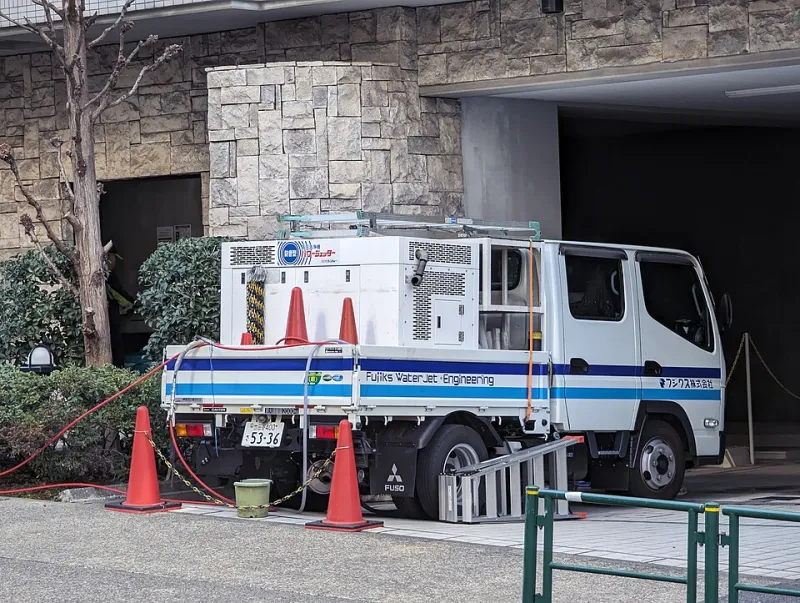
Photo: Syced, CC0, via Wikimedia Commons
A slow sink can make you want to grab the first tool on the shelf or say yes to the first truck that pulls into the driveway. But a drain snake and a hydro jetter are not interchangeable. One is a metal cable that bores through a blockage. The other is a high-pressure water tool that scours the inside of the pipe. Pick the wrong one for your situation and you can waste money, miss the real problem, or put unnecessary stress on older plumbing.
Here’s a practical way to think about the choice — and the questions worth asking before anyone puts a tool in your drain.
The short version: one opens a path, the other cleans the road
A snake is best understood as a key. It pushes through a clog and opens a channel so water can move again. A hydro jetter is closer to a scrub brush. It uses pressurized water to clean the pipe wall, clearing grease, sludge, scale, and soft debris that a cable might slide right past.
That difference matters. If you have a single slow bathroom sink and a wad of hair and soap scum in the trap, a cable is often the right first move. If your kitchen line keeps backing up because years of grease have narrowed the pipe, snaking may restore flow for a while but leave the real coating behind. The clog comes back because the pipe was never really cleaned.
What a drain snake is good at
A drain snake — whether it’s a small hand auger or a motorized cable machine — is designed for local blockages. It works well on hair, soap, paper, and the kind of stoppage that lives in a trap, a branch line, or a short run of pipe. It’s also the standard tool for many toilet clogs and for getting a drain open enough to diagnose what’s happening next.
What a snake does not do is clean the pipe wall. It can punch a hole through a grease clog or a root mass and make the drain seem fine for a few weeks. If the same fixture keeps slowing down, that’s a clue the cable is opening a path without solving the underlying buildup.
What hydro jetting is good at
Hydro jetting uses water at controlled high pressure to clean the inside of a drain line. It’s effective on grease, sludge, mineral scale, and the sticky film that collects in kitchen and main lines. In the right pipe, it can restore the full inside diameter rather than just poking a hole through the middle.
That said, hydro jetting is not a universal first step. It needs proper access, usually through a cleanout, and it needs someone who understands pipe condition. Blasting a fragile cast-iron line, an old clay tile line with offset joints, or a pipe with a hidden crack can turn a clog into a repair. The tool is powerful; the judgment behind it matters just as much.
A simple decision framework
Start with three questions: Where is the problem, what has likely caused it, and how old is the pipe?
| What you’re seeing | Sensible first step | Why |
|---|---|---|
| One sink or tub drains slowly, no other fixtures affected | Hand auger or small cable | Likely a local clog in the trap or branch line |
| Multiple fixtures gurgle or back up together | Camera inspection before cleaning | Points to a main-line issue |
| Same fixture clogs again within weeks | Camera inspection | A repeated clog usually has a cause a cable won’t fix |
| Kitchen line is slow and greasy | Camera, then hydro jetting if appropriate | Grease coats the pipe wall; a cable may only bore through it |
| Older cast-iron, clay, or Orangeburg pipe | Professional assessment first | Pressure and cable tools both need extra care in aging lines |
If the clog is new, isolated, and the drain is otherwise healthy, a snake is often enough. If the clog is recurring, affects several fixtures, or comes with grease or roots, the better answer is usually to inspect before cleaning. Sometimes that means a camera, then a jet. Sometimes it means a cable to restore flow so the camera can get through. The order should be based on evidence, not habit.
Why older Mercer homes need a different conversation
Many Mercer-area neighborhoods have plumbing that has seen a lot of winters. Mature trees send roots toward sewer lines. Older cast-iron pipes can scale and corrode. Clay tile can shift at the joints. The area’s mineral-rich water can leave deposits that narrow the pipe over time.
None of that means hydro jetting is automatically off the table. Many older lines can be jetted safely when the pressure is adjusted and the pipe has been checked. But a blanket “we’ll just jet it” without anyone looking at the line is a warning sign. In an older home, the cheap answer can be the expensive one if the pipe is already weakened.
Red flags that mean stop and call a pro
Some situations call for a pause before anyone runs a cable or a jetter. If sewage is backing up into multiple drains, if water rises in one fixture when you use another, or if you’ve already poured chemical drain cleaner into the line, stop. Those are signs of a larger blockage or a safety issue, and a DIY cable can make things worse.
Other red flags: gurgling that travels from sink to tub, bubbles in the toilet after laundry, a cleanout that won’t stay sealed, or a contractor who wants to jet a recurring clog without offering a camera inspection. A good drain technician should be willing to explain what they expect to find and why they’re choosing one method over the other.
Questions to ask before anyone puts a tool in your drain
Before work starts, ask what the diagnosis is and how they reached it. Ask whether they’ll camera the line before or after cleaning, and what pressure they plan to use if they’re jetting. For older pipes, ask how they’ll protect the line and what happens if they find a crack or a collapsed section.
It’s also fair to ask about pricing: Is the diagnostic visit separate? Is the camera included? What happens if the cable gets stuck? Do they guarantee the clog won’t return, and for how long? These aren’t suspicious questions. They’re the same questions a careful homeowner should ask before any repair that could affect the whole house.
The bottom line
A snake is a key; a hydro jetter is a scrub brush. If you have a new, local clog, a cable may be all you need. If you have a recurring backup, a greasy main line, or several fixtures acting up, slow down and get an inspection first. And if the pipe is old, fragile, or already backing up with sewage, the right move is not a bigger tool — it’s a professional who can tell you what the pipe can safely handle.